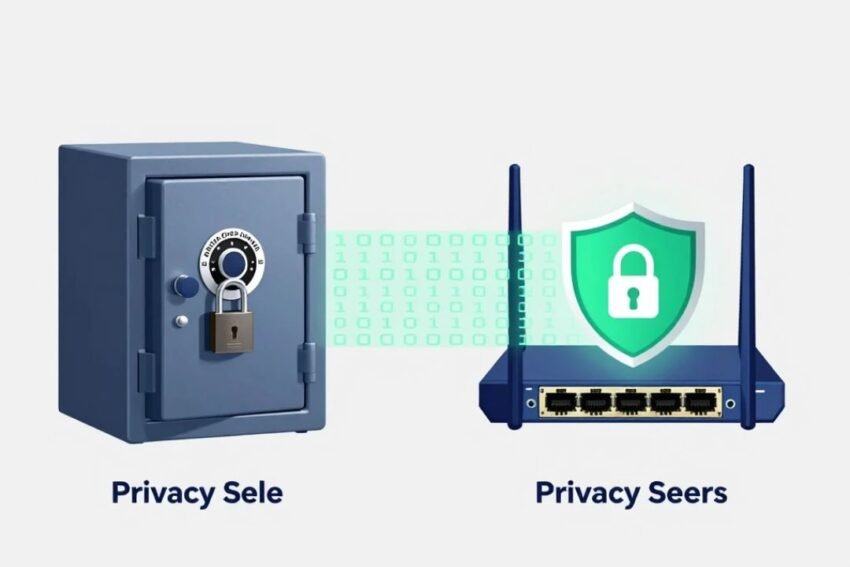
As businesses, governments, and individuals rely more on digital technology, two terms are frequently used when discussing online safety: Data Privacy and Cybersecurity. Although these concepts are closely connected, they are not the same. Many people mistakenly believe that data privacy and cybersecurity have identical meanings, but each focuses on a different aspect of protecting information.
Cybersecurity focuses on protecting systems, networks, and digital assets from cyber threats such as hacking, malware, phishing, and ransomware. Data privacy, on the other hand, focuses on how personal and sensitive information is collected, stored, shared, and used.
Understanding the difference between data privacy and cybersecurity is essential for businesses, employees, students, and anyone who uses the internet. This guide explains the key differences, similarities, benefits, challenges, and best practices to help you understand both concepts.
What Is Data Privacy?
Data privacy refers to the proper handling, collection, storage, processing, and sharing of personal or sensitive information. It ensures that individuals have control over how their personal data is used by organizations.
Data privacy is concerned with questions such as:
- What information is being collected?
- Why is the information collected?
- Who can access the information?
- How long is the data stored?
- Is the user aware of the data collection?
- Can users request deletion of their data?
Organizations must respect privacy policies and legal requirements when managing customer information.
What Is Cybersecurity?
Cybersecurity is the practice of protecting computers, networks, servers, software, and digital information from cyber threats and unauthorized access.
Cybersecurity focuses on preventing attacks such as:
- Hacking
- Malware
- Ransomware
- Phishing
- Data breaches
- Identity theft
- Denial-of-service attacks
- Insider threats
The goal is to maintain the confidentiality, integrity, and availability of digital systems and information.
Why Data Privacy Matters
Personal information has become one of the most valuable digital assets.
Data privacy protects:
- Personal identity
- Financial information
- Medical records
- Contact details
- Business information
- Customer records
- Employee data
Proper privacy practices increase user trust and help organizations comply with legal regulations.
Why Cybersecurity Matters
Without cybersecurity, sensitive information becomes vulnerable to cybercriminals.
Strong cybersecurity helps:
- Prevent data breaches
- Reduce financial losses
- Protect business operations
- Secure online transactions
- Maintain customer trust
- Protect intellectual property
- Reduce downtime
- Improve business continuity
Cybersecurity forms the technical foundation that helps keep digital systems secure.
Key Differences Between Data Privacy and Cybersecurity
Although related, these two concepts have different objectives.
Primary Focus
Data Privacy
Focuses on how information is collected, used, stored, and shared.
Cybersecurity
Focuses on protecting systems and data from unauthorized access and cyberattacks.
Main Objective
Data Privacy
Ensures personal information is handled responsibly and according to legal requirements.
Cybersecurity
Protects digital systems, networks, and information from security threats.
Concern
Data Privacy
Who has permission to access personal information?
Cybersecurity
How can unauthorized users be prevented from accessing systems?
Main Goal
Data Privacy
Protect user rights and personal information.
Cybersecurity
Protect technology infrastructure and digital assets.
Examples
Data Privacy
- User consent
- Privacy policies
- Data collection rules
- Data deletion requests
- Personal information management
Cybersecurity
- Firewalls
- Antivirus software
- Encryption
- Multi-factor authentication
- Intrusion detection systems
How Data Privacy and Cybersecurity Work Together
Although different, data privacy and cybersecurity support each other.
For example:
A hospital stores patient medical records.
Data privacy determines:
- Who can access patient records.
- Why information is collected.
- How patient consent is obtained.
Cybersecurity ensures:
- Hackers cannot steal medical records.
- Systems remain protected.
- Patient information stays secure.
Without cybersecurity, privacy cannot be guaranteed. Likewise, strong cybersecurity alone does not ensure proper data privacy if organizations misuse personal information.
Common Cybersecurity Threats
Businesses and individuals face many online threats.
Phishing
Fraudulent emails or messages designed to steal passwords or personal information.
Malware
Malicious software created to damage systems or steal information.
Ransomware
Software that locks files until a ransom is paid.
Password Attacks
Hackers attempt to guess or steal login credentials.
Data Breaches
Unauthorized access to confidential information.
Insider Threats
Employees or authorized users intentionally or accidentally expose sensitive information.
Common Data Privacy Risks
Privacy issues often result from poor data management.
Examples include:
- Collecting unnecessary information
- Sharing customer data without permission
- Weak privacy policies
- Excessive employee access
- Poor data storage practices
- Long-term storage of outdated records
Organizations should minimize these risks through proper governance.
Benefits of Strong Data Privacy
Good privacy practices provide many advantages.
These include:
- Greater customer trust
- Better legal compliance
- Improved business reputation
- Reduced privacy complaints
- Responsible data management
- Better customer relationships
- Increased transparency
- Stronger brand credibility
Customers are more likely to trust organizations that respect their personal information.
Benefits of Strong Cybersecurity
Cybersecurity protects both organizations and users.
Major benefits include:
- Reduced cyberattacks
- Better business continuity
- Improved system reliability
- Lower financial losses
- Stronger customer confidence
- Safer online transactions
- Faster threat detection
- Better protection against hackers
Strong cybersecurity reduces operational risks.
Best Practices for Data Privacy
Organizations should follow responsible privacy practices.
Important recommendations include:
- Collect only necessary information.
- Obtain user consent.
- Create clear privacy policies.
- Limit access to sensitive data.
- Delete unnecessary records.
- Encrypt personal information.
- Train employees on privacy requirements.
- Regularly review data management practices.
Privacy should be considered throughout the entire data lifecycle.
Best Practices for Cybersecurity
Businesses and individuals should adopt strong security habits.
Recommended practices include:
- Use strong passwords.
- Enable multi-factor authentication.
- Install antivirus software.
- Update software regularly.
- Back up important files.
- Secure Wi-Fi networks.
- Monitor systems continuously.
- Educate employees about phishing attacks.
Cybersecurity requires continuous improvement as threats evolve.
Challenges Facing Organizations
Both privacy and cybersecurity present ongoing challenges.
Common issues include:
- Increasing cyber threats
- Complex legal regulations
- Remote work security
- Cloud security risks
- Third-party vendors
- Human error
- Limited cybersecurity budgets
- Rapid technological changes
Organizations must continuously adapt to new risks.
Role of Artificial Intelligence
Artificial Intelligence is becoming increasingly important in both areas.
AI supports cybersecurity by:
- Detecting cyber threats
- Monitoring network activity
- Identifying suspicious behavior
- Automating incident response
AI also supports privacy by:
- Identifying sensitive information
- Managing consent records
- Detecting unusual data access
- Improving compliance monitoring
Responsible AI implementation strengthens both privacy and security.
Future of Data Privacy and Cybersecurity
Technology continues to evolve rapidly. Artificial Intelligence, cloud computing, the Internet of Things (IoT), and remote work have increased both opportunities and security challenges. Governments are introducing stronger privacy regulations, while businesses are investing more in cybersecurity solutions to defend against sophisticated cyber threats.
In the future, organizations will need to balance innovation with responsible data management. Protecting personal information and securing digital infrastructure will remain top priorities for businesses of every size.
Frequently Asked Questions (FAQs)
What is the difference between data privacy and cybersecurity?
Data privacy focuses on how personal information is collected, used, stored, and shared, while cybersecurity focuses on protecting systems and data from cyber threats and unauthorized access.
Can cybersecurity exist without data privacy?
Yes, but strong cybersecurity alone does not guarantee privacy. An organization may protect data from hackers while still misusing personal information.
Why are both important?
Together, data privacy and cybersecurity protect sensitive information, maintain customer trust, reduce business risks, and support legal compliance.
Is encryption related to privacy or cybersecurity?
Encryption is primarily a cybersecurity measure because it protects information from unauthorized access. It also supports data privacy by safeguarding personal information.
How can businesses improve both privacy and cybersecurity?
Businesses should implement strong passwords, multi-factor authentication, encryption, employee training, regular software updates, clear privacy policies, access controls, and responsible data management practices.
Conclusion
Although data privacy and cybersecurity are closely connected, they serve different purposes. Data privacy focuses on ensuring personal information is collected and used responsibly, while cybersecurity protects systems, networks, and digital assets from cyber threats. One cannot fully succeed without the other.
Organizations that combine strong cybersecurity measures with responsible data privacy practices create a safer digital environment for customers, employees, and business operations. By implementing security technologies, respecting user privacy, training employees, and staying informed about evolving threats, businesses can reduce risks, build customer trust, and maintain long-term success in an increasingly digital world.